Last Updated: November 24, 2026
Quick Summary
Finding quiet vacation homes in Florida means looking past photos and price, because listings rarely mention noise. Check distance to roads, beaches, and bars, read reviews for noise language, and get quiet-hours rules and an after-hours contact in writing before you pay.
- Ask how far the home sits from roads, beach access, and busy bars or restaurants.
- Search reviews for words like quiet, noisy, traffic, and sleep rather than star ratings.
- Ask whether a private pool's pump and heater sit near a bedroom window.
- Get quiet-hours rules and an after-hours contact confirmed in writing before paying.
- Add cleaning fees and service charges before comparing nightly rates.
Table of Contents
- Beachfront Cottages and Bungalows Near the Coast
- Cabins Near Springs, Rivers, and Secluded Nature
- Rentals with Private Pools: What to Look For
- Verifying Noise Levels, Access, and Neighbor Policies
- Best Practices for Booking a Quiet Florida Rental
- Planning Your Quiet Florida Stay at Cozy Canaveral Cottages
- Frequently Asked Questions
Finding quiet vacation homes in Florida takes more work than most travelers expect. Travelers often arrive expecting peace and find a busy street, a neighbor's party, or a rental with thin walls. Florida is a major vacation-home market.
The real challenge is that "quiet" rarely appears in a listing. Photos show a pool and a view, not whether the house sits beside a bar or a busy road. Most search filters skip the question entirely. So travelers have to read between the lines and ask direct questions before they book.
Keep in mind that a quiet-hours policy does not guarantee a quiet stay. Read the fine print, and ask who to call when a problem starts.
Florida's rental market is also large and fragmented. Price alone will not solve the quiet question.
Beachfront Cottages and Bungalows Near the Coast
Beachfront cottages offer the ocean sound most travelers want, but the same sound can make a stay restless if you need sleep. Wind, surf, and early beach crowds all carry. Choose a home set back from the waterfront or on a side street if you want the sea without the constant noise.
Cozy Canaveral Cottages sits just over a block from the beach, so guests can walk to the sand. Ask any host how far the home sits from the nearest beach access and busy road.
Best for: couples and families who want the coast within walking distance.
Skip if: you need total silence or plan to sleep with the windows open near a busy stretch of sand.
The table below summarises the key trade-offs for beachfront stays, based on the points made above.
| Factor | Detail | Note |
|---|---|---|
| Beach distance | Cozy Canaveral Cottages | Just over a block from the beach |
| Best for | Couples and families | Want the coast within walking distance |
| Main drawback | Wind, surf, early beach crowds | Carry and can disrupt sleep |
| Skip if | Need total silence | Or sleep with windows open near busy sand |
| Better option | Set back or side street | Sea sound without constant noise |
Cabins Near Springs, Rivers, and Secluded Nature
Inland cabins near springs and rivers are the quietest option most travelers overlook. Fewer neighbors and wooded paths mean fewer sounds to manage.
The catch is access. Remote cabins may need a longer drive from airports, grocery stores, and Space Coast attractions. Confirm road conditions and distance to supplies before you commit, especially if you are traveling with children or planning a multi-week stay.
Pros: natural quiet, scenic surroundings, a true escape from traffic.
Cons: longer drives, fewer nearby services, and less predictable Wi-Fi.
Rentals with Private Pools: What to Look For
A private pool is one of the most-requested features for Florida stays. Private pools also reduce the crowding and noise of shared community pools. But a private pool is not automatically a quiet pool, and the difference comes down to siting, equipment, and rules you can verify before you book.
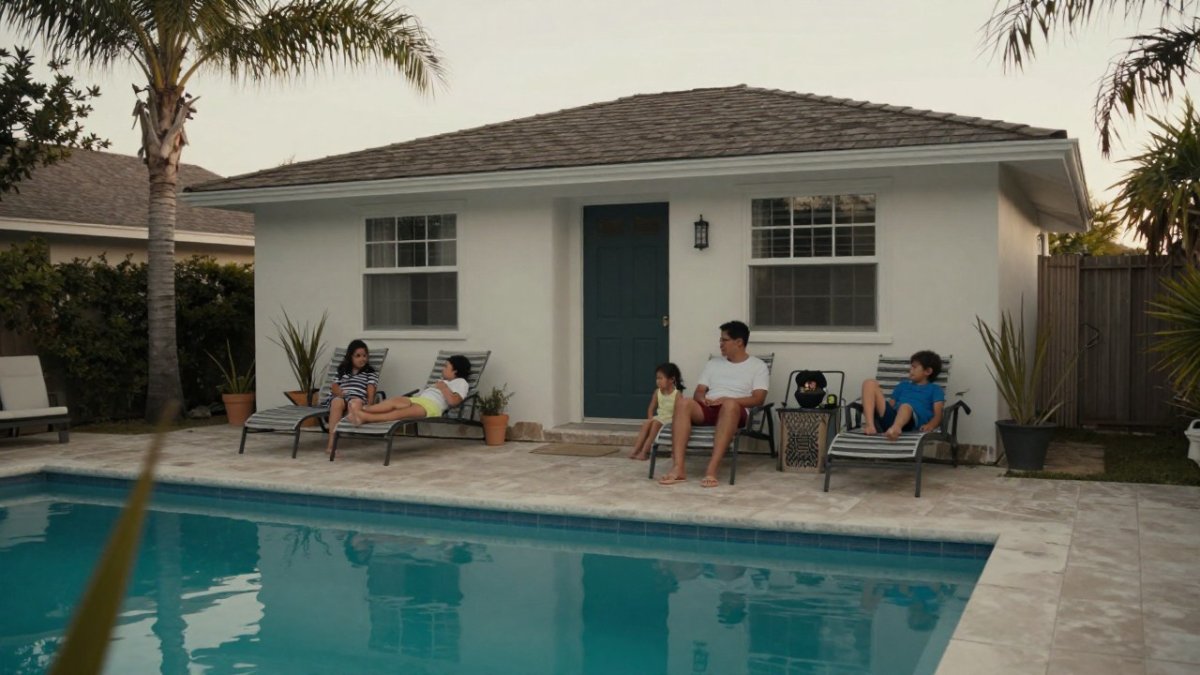
Screen the pool's equipment, not just its existence. Pool pumps and heaters cycle on and off, and an older single-speed pump can be the loudest thing on the property at night. Ask the host whether the pump runs on a timer, whether it is variable-speed, and whether the equipment pad sits near a bedroom window. A pool that looks serene in photos can hum against a wall all evening.
Check the pool's relationship to the property line. A fenced pool helps with safety and privacy, but the fence line matters as much as the fence. Ask how many feet separate the pool deck from the nearest neighboring structure, and whether that neighbor has a pool, a dog run, or a patio that faces yours. Two private pools back-to-back can create more noise than one shared pool.
Confirm the pool's hours and enforcement. Many rentals publish quiet hours and pool hours separately. Ask whether the host enforces pool hours, who monitors them, and what happens if a neighboring rental ignores them. A quiet-hours policy on paper does not guarantee a quiet pool deck at 10 p.m.
Ask about heating and seasonal use. A heated pool extends the season, but heaters and heat pumps add mechanical noise and can run overnight. Confirm whether heating is included, whether it runs on a schedule, and whether the equipment is near the house. If you are booking in cooler months, ask how the host keeps the pool warm without running equipment all night.
Match the pool to your group. A private pool can suit families with young children and couples who want to swim without a community-pool crowd. It is a weaker fit if you need total silence after dark, because pumps, heaters, and neighboring pool decks all carry. Ask the host to describe the pool area at night, not just in the afternoon light.
Watch out: a listing that says "pool access" may mean a shared or community pool, not a private one. Confirm in writing that the pool is exclusively for your rental and that no other guests share the deck.
Verifying Noise Levels, Access, and Neighbor Policies
Most listings will not answer the questions that decide whether a stay is quiet, so the work falls to you. The gap most guides leave open is method: a repeatable way to score a property before you pay. Use the steps below to build a simple noise-and-access profile for any rental you are considering.
Step 1: Map the property's sound sources. Open the address in a mapping tool and switch to satellite and street view. Identify the nearest arterial road, highway on-ramp, rail line, bar or restaurant row, event venue, and beach access point. Note the distance to each in blocks or miles.
Step 2: Check the surrounding land use. Look for vacant lots, construction sites, short-term rentals, and commercial parcels next door. A quiet street can change quickly if a neighboring lot is under construction or if the house next door is itself a rental with a pool. Ask the host what sits on each side of the property and whether any neighboring parcels are for sale or under development.
Step 3: Read reviews for noise language, not star ratings. Search recent reviews for words like "quiet," "noisy," "traffic," "neighbors," "construction," and "sleep." A single mention of a barking dog or an early garbage truck is more useful than ten five-star ratings. Ask the host for reviews from the same season you plan to travel, since summer crowds and winter snowbird traffic produce different sound profiles.
Step 4: Ask a fixed set of questions in writing. Send the same list to every host so you can compare answers side by side: How far is the nearest road, beach access, and bar or restaurant? Does the property share walls, a driveway, or a pool deck with another rental? What are the quiet hours, and who enforces them?
Step 5: Confirm the neighbor-policy reality. Florida Vacation Homes' terms, for example, say the company may not manage adjoining properties and directs guests to the neighborhood if a neighbor breaks quiet-time rules. That is a common pattern in the market: the host controls the house, not the block. Ask who is responsible for neighbor disputes and what the realistic response time is after hours.
Step 6: Score access and logistics. Secluded homes often require a car. Confirm the drive time to the nearest airport, grocery store, and pharmacy, and ask whether parking is included and whether the driveway is shared. A remote cabin with a long unpaved access road can be peaceful and still be a poor fit for a late arrival or a rental car with low clearance.
Step 7: Verify connectivity if you plan to work. Quiet seekers often work remotely, and Wi-Fi reliability is rarely stated in listings. Ask the host for the provider and the plan's advertised download speed, whether there is a backup connection, and whether cell service is strong enough to tether. In remote areas, a host's honest answer about dead zones is more valuable than a generic "fast Wi-Fi" claim.
Watch out: a quiet-hours policy does not guarantee a quiet stay. Get written confirmation of quiet hours and an after-hours contact before you pay, and treat a host who will not put those terms in writing as a warning sign.
Best Practices for Booking a Quiet Florida Rental
Start your search early, especially for peak seasons. Compare at least three properties on the same dates so you can see real differences in location and price. Compare like with like when reviewing nightly rates.
Ask about minimum stays, cancellation terms, and what happens if the property does not match the listing. Written confirmation of quiet-hours rules and emergency contacts is worth requesting before you pay.
Watch out: a low nightly rate can hide cleaning fees, service charges, and deposit rules. Add every fee before you compare two options.
Plan your arrival too. Ask for directions from the airport, and confirm whether parking is included. Noise and stress often start on arrival day, so a clear plan helps everyone settle in.
Planning Your Quiet Florida Stay at Cozy Canaveral Cottages
Cozy Canaveral Cottages offers a private, three-cottage property just over a block from the beach in Cape Canaveral. The fully renovated cottages feature exposed wood ceilings and floors, a private pool and outdoor recreation area, and a fenced property that gives guests privacy. Accommodations suit couples and families, and the setting offers access to local Space Coast attractions.
Pricing depends on dates, length of stay, and availability, so contact Cozy Canaveral Cottages for a current quote.
Finding a quiet Florida home takes a few direct questions and a clear sense of what you need. If a private, fenced retreat near the beach fits your plans, contact Cozy Canaveral Cottages to check availability and ask any remaining questions before you book.
Frequently Asked Questions
Where can I find a quiet vacation destination in Florida?
Quieter stays tend to sit away from the busiest strips, in areas like the Space Coast, the Panhandle, and inland springs or river towns. Search listings for words like secluded, cottage, or cabin, then read recent guest reviews for mentions of traffic, nightlife, or neighbors. Cape Canaveral's beachside cottages, for example, offer a relaxed setting just over a block from the sand. Check each property's quiet-hours policy before booking, since a rental may not control noise at adjoining homes.
How do I ensure my vacation rental is truly secluded?
Ask the host whether the property is fenced, how close the nearest neighbors are, and whether it sits on a busy road. Look at satellite maps to confirm the surroundings. Reviews are useful too: guests often mention noise from nearby properties. A rental marketed as private should describe its layout and privacy features clearly. If details are vague, contact the host with specific questions before you commit to a rental with a private pool or outdoor area.
What amenities should I look for in a quiet vacation home?
Look for a private outdoor space, such as a pool or fenced yard, so you can relax without sharing grounds with other guests. Confirm the property has reliable internet if you plan to work remotely, and check whether parking and walking routes are easy. Many rentals listing a private pool report it as a key draw. Also ask about cleaning schedules and check-in procedures.
What are the benefits of choosing a private cottage over a resort?
A private cottage gives you full use of the property without shared lobbies, crowded pools, or hotel-style noise. Stays like Cozy Canaveral Cottages' three-cottage property offer a home-like atmosphere with exposed wood ceilings, a private pool, and a fenced outdoor area. Cottages also suit longer stays, since you can cook, do laundry, and keep a routine. Resorts may offer more activities, but a private cottage is usually the better choice when peace and seclusion are the priority.