Last Updated: November 13, 2026
Quick Summary
To find safe beach rentals for toddlers, check the pool barrier and gate latch first, then review stairs, balconies and windows, confirm a short walk to the sand, and ask the host to confirm each safety item in writing before booking. Pools are the biggest drowning risk, so a fully fenced pool with a self-latching gate is the first thing to verify.
- Confirm the pool is fully fenced, with a self-closing, self-latching gate out of toddler reach.
- Look for a single-story layout or stair gates at the top and bottom of any staircase.
- The CPSC reports at least 64 fatal and non-fatal pool drownings in vacation rentals involving children under 15.
- Send safety questions to the host through the platform's messaging system so answers stay in writing.
- Do a room-by-room safety walk on arrival and photograph any hazard before unpacking.
Table of Contents
- Why Toddler Safety Changes How You Pick a Beach Rental
- Step 1: Check the Pool Barrier and Access Controls
- Step 2: Review the Layout, Stairs and Fall Hazards
- Step 3: Confirm Beach Access and Distance From the Rental
- Step 4: Ask the Host the Right Safety Questions Before Booking
- Step 5: Use a Beach House Childproofing Checklist on Arrival
- Step 6: Apply Toddler Beach Safety Tips on the Sand and in the Water
- Booking Your Toddler-Safe Stay at Cozy Canaveral Cottages
- Frequently Asked Questions
Why Toddler Safety Changes How You Pick a Beach Rental
Choosing a beach rental with a toddler is not the same as choosing one for adults, so finding safe beach rentals takes a closer look at the details. Consumer Product Safety Commission (CPSC) reports that it was aware of at least 64 fatal and non-fatal pool drownings in vacation rental homes involving children under 15 CPSC Know Before You Go: Pool Safety and Vacation Rentals.
The right rental starts with safe basics: a secure pool area, a simple layout, and easy access to the sand. This guide walks you through seven steps to find a safe beach rental for toddlers. Each step gives you a specific thing to check.
Safe beach rentals for toddlers share a few traits. They have a fenced pool with a self-latching gate. Once the rental itself is secure, check that any borrowed baby gear is safe to use through Innabi Rentals.
Step 1: Check the Pool Barrier and Access Controls
A pool is the biggest drowning risk for toddlers, so start here. Look for a fence that fully encloses the pool, not just the yard. The gate should close on its own and latch out of a small child's reach.
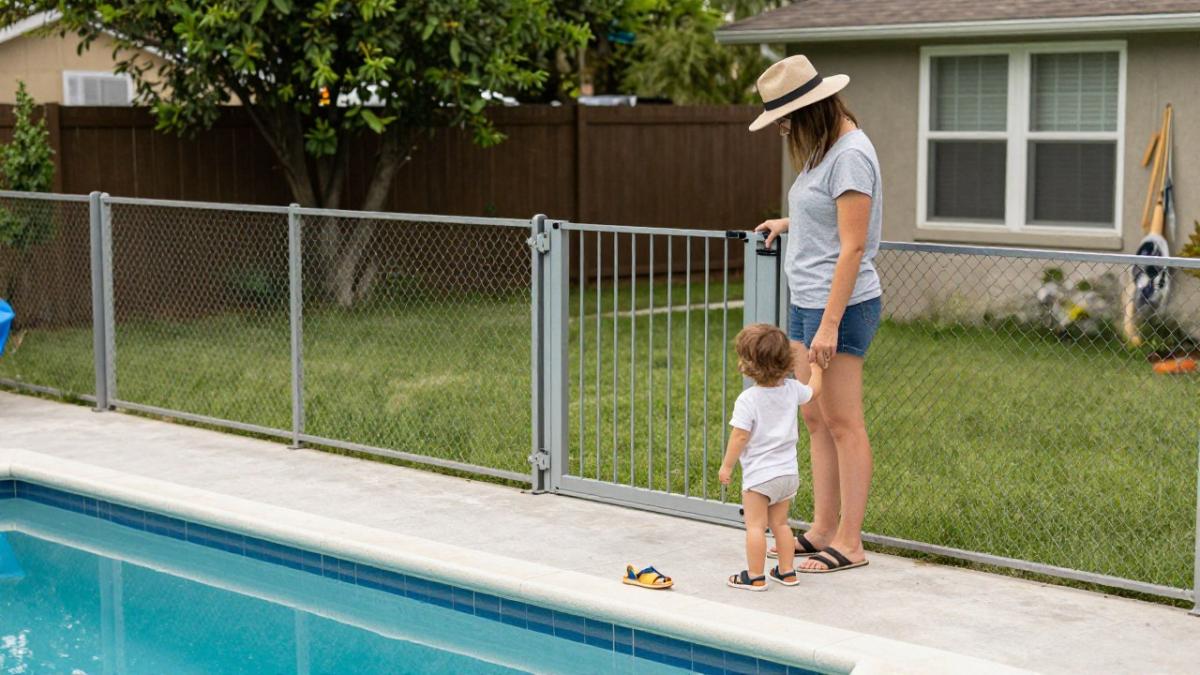
Before you book, ask the host how the gate is secured. Check whether the pool is covered or has a safety cover when no one is in it.
Questions to Ask About the Pool Gate
- Is the pool fully fenced on all sides?
- Does the gate self-close and self-latch?
- Is the latch placed high, out of toddler reach?
- Are there any gaps under or around the fence?
- Does the pool have a cover, alarm, or both?
Step 2: Review the Layout, Stairs and Fall Hazards
Falls cause many toddler injuries. Look at the floor plan before you commit. A single-story rental removes most stair risk. If the home has more than one floor, check for stair gates, sturdy railings, and gaps wide enough for a small head or body to slip through.
Open balconies, loft railings, and large windows near the floor need a closer look. Ask whether the host has added window guards or door locks.
Keep this short checklist handy:
- Single-story layout, or a stair gate at the top and bottom
- Railings with no gaps a toddler can fit through
- Balcony doors that lock
- Low furniture that a child could climb
- Clear floors with no loose rugs
Step 3: Confirm Beach Access and Distance From the Rental
A close beach is a big plus with a toddler. Every walk to the sand is a chance for your child to run ahead.
Check how the beach is reached. Is there a boardwalk, a sidewalk, or a dune crossing? Dune paths can be steep and sandy, which is hard for a toddler to walk.
Think about shade too. Look for a covered porch, umbrella space, or a shaded yard where your toddler can rest between sun and sand.
Step 4: Ask the Host the Right Safety Questions Before Booking
Listing photos only show part of the story, and a host's quick "yes" is not the same as a verified safety feature.
Start by sending your questions through the platform's messaging system so the answers stay in writing. Ask the host to confirm each item individually rather than answering with a general "the home is child-friendly." A clear, itemized reply is a good sign; vague or evasive answers are a warning.
Core Safety Questions to Send in Writing
- Is the pool fully enclosed by a fence on all sides, and does the gate self-close and self-latch?
- Where is the pool gate latch located, and is it above toddler reach?
- Are there stairs, and are stair gates installed at the top and bottom?
- Do balcony and deck doors have locks or latches that a toddler cannot reach?
- Are window guards or limited-opening devices installed on windows near floor level?
- Are cleaning products, medicines, and other hazardous items stored in locked or high cabinets?
- What safety equipment is on site: crib, high chair, playpen, outlet covers, cabinet latches, pool alarm, safety cover?
- What is the exact walking route to the beach, and does it cross a road?
- What is the rental's exact street address, and where is the nearest urgent care or emergency room?
Verify the Answers Against the Listing Photos
Before you accept a host's answers, look back at the listing photos with those answers in mind. A fenced pool should be visible in at least one photo; if it is not, ask for a current photo of the pool barrier and gate. Stair gates, window locks, and outlet covers are small details that hosts often omit from listing photos, so request close-up images of any item you are relying on.
Confirm Rental-Specific Safety Equipment
Do not assume safety equipment is provided just because the rental markets itself to families. Confirm the presence and condition of each item you need, and ask when it was last checked.
Watch out: a host may describe a pool as "fenced" when only the yard is fenced and the pool itself is open. Ask specifically whether the barrier separates the pool from the house and yard, not just the property from the street.
Keep a Written Record
Save the host's replies, the listing photos, and any follow-up messages in one folder or email thread. If the rental does not match the listing on arrival, this record is your evidence for a platform dispute or refund request. It also gives you a checklist to compare against when you do your arrival walk-through.
Use this quick reference to pin down the safety details to confirm with your host before you pay.
| Check | What to confirm | Why it matters |
|---|---|---|
| Pool gate | Fully fenced, self-closing, self-latching | Pools are the biggest drowning risk |
| Gate latch | Placed above toddler reach | A low latch can be opened by a child |
| Stairs | Gates at top and bottom | Falls cause many toddler injuries |
| Balcony and deck doors | Locks a toddler cannot reach | Open doors create fall risk |
| Windows | Guards or limited-opening devices | Protects children near floor-level windows |
| Hazardous items | Locked or high storage | Cleaning products and medicines are dangerous |
| Crib and playpen | Meets current safety standards, not recalled | Sleep equipment must be safe |
| Beach route | Walking path, and whether a road is crossed | Reduces the chance of a child running into traffic |
Step 5: Use a Beach House Childproofing Checklist on Arrival
Even a well-chosen rental needs a focused safety walk on arrival, and the most effective version is room by room rather than a quick scan. Do this before you unpack or let your toddler explore. Carry your phone to take photos of any hazard you find, and keep a small kit of your own supplies: outlet covers, cabinet latches, a door stop, a few zip ties, and a first-aid kit with a children's pain reliever and a thermometer.
Room-by-Room Arrival Inspection
Entry and living areas. Check that outlet covers are in place or add your own.
Kitchen. Lock or move cleaning products, dishwasher pods, and knives out of reach.
Bathrooms. Store medicines, razors, and cleaning supplies in a locked or high cabinet.
Pool and outdoor areas. Test the pool gate latch and confirm the fence has no gaps or climbable objects nearby.
What to Do When Something Is Missing or Broken
If a critical safety feature is missing or broken, contact the host immediately and ask for a fix or a replacement item. Document the issue with a photo and a message so there is a record. If the host cannot resolve it quickly, use your own supplies or adjust your plan: for example, keep the toddler out of a room with an unguarded window, or block a stairway with a temporary barrier.
Emergency Readiness Before You Unpack
Find the rental's exact street address and save it in your phone. Locate the nearest urgent care or emergency room and note the drive time. Save the host's phone number and the local emergency number. Check that your first-aid kit is stocked and that you know where the nearest pharmacy is.
Watch out: a rental that looks childproofed in photos may have temporary fixes that were removed after the photo was taken. Test every latch, gate, and lock yourself rather than trusting the listing.
Step 6: Apply Toddler Beach Safety Tips on the Sand and in the Water
The rental is only part of the picture. Beach and water hazards can be just as serious.
Stay within arm's reach of your toddler in the water, even if they wear a life jacket. A life vest does not replace an adult watching closely.
Protect your child from the sun. Use sunscreen made for kids, a hat, and a shaded spot.
Avoid leaving a toddler alone near the water, even for a moment. Drowning can happen quietly and quickly.
Booking Your Toddler-Safe Stay at Cozy Canaveral Cottages
Finding a safe beach rental for a toddler takes some checking, but the steps are simple: confirm the pool barrier, review the layout, check beach access, ask your host hard questions, do a safety walk on arrival, and watch closely at the beach. Cozy Canaveral Cottages offers a private three-cottage property just over a block from the beach, with a private pool and outdoor recreation area for guests. Ask the host about the pool gate, stairs, and equipment before you book.
Frequently Asked Questions
What is the best beach destination for a family with a toddler?
The best beach for a toddler is one with gentle, shallow entry, lifeguards on duty and easy access from your lodging. For a family staying in a vacation rental, look for a property that is close enough to walk to the sand without crossing busy roads, and that has a fenced private pool if you plan to use one. Shade near the water matters too, since toddlers overheat quickly. Ask the host about the nearest lifeguarded stretch and whether beach carts or strollers can be rolled across the sand.
Is a ground-floor beach rental safer for toddlers?
Often, yes. A single-story rental removes the risk of falls down stairs and reduces the number of balconies or open railings a toddler can reach. If a multi-level home is the only option, confirm that stair gates can be installed at the top and bottom, that railings have no gaps wide enough for a child's head, and that any upper balcony has a barrier at least 42 inches high. Ask the host to confirm these details in writing before you book.
What safety questions should I ask a beach rental host before booking?
Ask whether the pool is fenced with a self-closing, self-latching gate, and whether the property has a pool cover. Confirm the number of stairs, railing gaps and balcony barriers, and whether the host provides or allows stair gates and outlet covers. Ask how far the rental is from the beach and whether there is a safe path to it. Finally, ask whether there is a first aid kit and the nearest urgent care or hospital. Keep the host's answers in your booking messages so you can refer to them on arrival.
How do I childproof a vacation rental after arrival?
Start with a walk-through before unpacking. Check that pool gates latch, that railings and stair gaps are secure, and that cabinets with cleaning products and medicines can be locked or moved out of reach. Cover outlets, tie up window cords and move breakable decor. Place a portable barrier around the pool area if the fence is incomplete, and set up a sleeping space away from any windows with low sills. Bring your own travel safety gear, since many rentals do not supply it.